Organ Samples for Hauptwerk Virtual Pipe Organ








© Lavender Audio / DCSB Audio LTD 2008 -




THE ORGANS

All organs are presented as “wet” sample sets, with microphones positioned reasonably close to the pipes and therefore needing little or no additional reverberation. Please click on the screenshot thumbnail to find out more about each instrument.

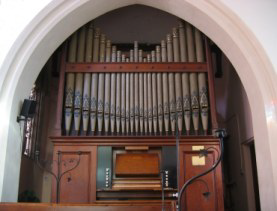
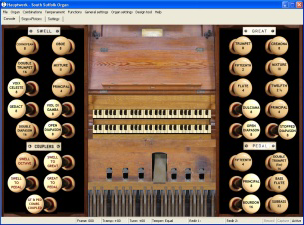
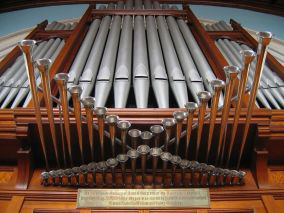
St Lawrence, Little Waldingfield
An 18 stop instrument by Suffolk organ builder Joseph Hart, dating from 1809.
An 18 stop instrument by Suffolk organ builder Joseph Hart, dating from 1809.


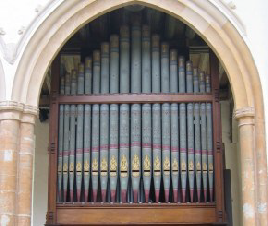
Haverhill Old Independent Church
A 40 stop English romantic organ built by J.J. Binns and dating from 1901. A range of sample sets based on this instrument are available.
A 40 stop English romantic organ built by J.J. Binns and dating from 1901. A range of sample sets based on this instrument are available.

Hereford Cathedral
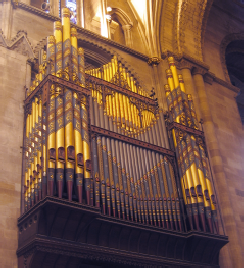
Built in 1892, this is a fine example of Father Willis’s later work, comprising of some 67 speaking stops. Various sample sets based on this instrument are now available, from a small evaluation set to the complete instrument.
Built in 1892, this is a fine example of Father Willis’s later work, comprising of some 67 speaking stops. Various sample sets based on this instrument are now available, from a small evaluation set to the complete instrument.

St Bartholomew, Armley
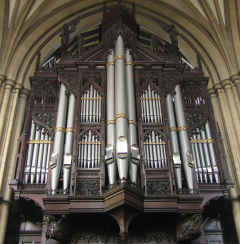
One of Edmund Schulze’s finest instruments which has been preserved in near original condition. Two instruments are available - the complete 57 stop organ and a smaller 32 stop sample set; both feature multiple recording perspectives.
One of Edmund Schulze’s finest instruments which has been preserved in near original condition. Two instruments are available -
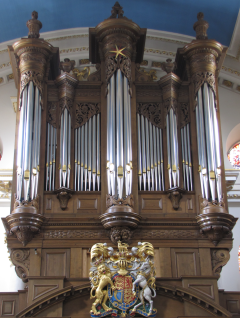
St Mary-le-Bow, London
Built in 2010 by Kenneth Tickell, this 2 manual, 30 stop organ is classically styled with some French influences. This sample set includes an extended version of 39 speaking stops over 3 manuals, all exclusively based on the St Mary-le-Bow samples.
Built in 2010 by Kenneth Tickell, this 2 manual, 30 stop organ is classically styled with some French influences. This sample set includes an extended version of 39 speaking stops over 3 manuals, all exclusively based on the St Mary-